
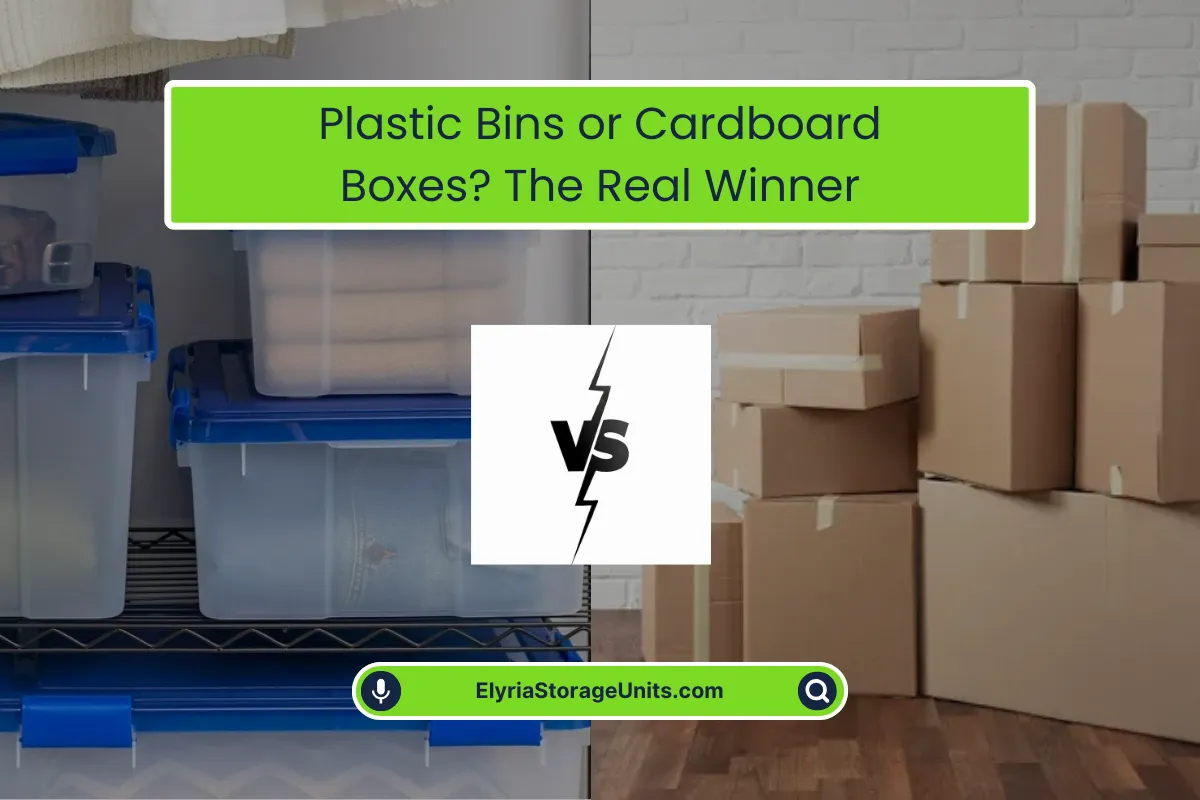
You know that moment when you’re finally ready to clear out the clutter? You feel this surge of motivation. You’re a warrior, armed with trash bags and determination. You conquer the chaos, and you’re left with a neat pile of things you need to keep. The victory feels sweet.
Then, reality hits. Where does this stuff go?
If you’re like me, your first instinct is to grab the free boxes. The Amazon graveyard in the garage. It feels smart, thrifty even. Why spend money on fancy plastic when you’ve got perfectly good cardboard, right?
Oh, man. Let me pour you a metaphorical cup of coffee and tell you a story.
A few years back, I moved my mom into a smaller place. We packed up a lifetime of memories into these sturdy-looking liquor store boxes. We filled one with her favorite books and photo albums, another with her good table linens—the ones she only brought out for holidays. We stacked them neatly in the back corner of my dry, finished basement. “Perfect,” I thought.
Fast forward two years. I went to grab a book from that box. The bottom felt… soft. Mushy, even. I lifted it, and with a sad, crumbly sigh, the entire bottom gave way. Hardcover books tumbled onto the floor. And the smell. This wasn’t the pleasant smell of old paper. This was a damp, sweet, slightly sour smell of mildew. The photos were stuck together at the corners. The linens in the box below had faint, ugly yellow spots.
I felt like an idiot. My basement wasn’t wet. There was no flood. But over two years, just the natural humidity in the air—the kind you never even notice—had slowly seeped into those cardboard walls. It created a perfect, damp little ecosystem for mold. I’d saved a few bucks on boxes and ruined irreplaceable things.
That was my expensive lesson. So let’s get into it.
The Sad Truth About Cardboard (The Box of Broken Dreams)
Look, cardboard is fantastic for a lot of things. Getting groceries home. A one-time move across town where you’ll unpack in a week. Holding your recycling.
For long-term storage? It’s a traitor. It pretends to be strong, but it’s working against you.
- It’s a Moisture Magnet: Cardboard is made of paper and glue. It absorbs moisture from the air like a sponge. Even in a “dry” basement or garage, there’s humidity. Over months, that cardboard gets weaker and damp from the inside out.
- It’s Bug Hotel & Spa: Silverfish, roaches, and especially those dreaded little carpet beetles? They love cardboard. They eat the glue and the paper fibers, and they nest in the dark crevices. You’re not just storing your Christmas ornaments; you’re storing a future bug colony’s breakfast.
- It Has a Shelf Life: The structural integrity of cardboard fades. The bottom is the first to go. You’ll be merfully carrying a box labeled “DISHWARE” and suddenly, it’s raining Corelle on your toes. Trust me on this one.
Why Plastic Bins Are Worth Every Penny
After the Great Linen Disaster, I went out and bought a stack of those solid, lid-clamping plastic bins. It felt like an annoying extra cost at the time. Now? Best money I ever spent.
Here’s the thing no one says outright: Plastic bins aren’t just containers; they’re time capsules.
When you click that lid shut, you’re sealing your stuff off from the world. You’re creating a tiny, stable environment.
- The Great Wall of Plastic: Bugs can’t get in. Moisture can’t get in. Dust struggles to get in. Your belongings are in a protective shell.
- They Actually Last: I’ve had the same set of bins for eight years now. They’ve been through three storage shuffles, moved with me once, and they still stack perfectly. The handles haven’t ripped. The lids still snap shut. The upfront cost spread over a decade is pennies.
- The “See-It” Bonus: I’m a lazy labeler. With the clear bins, I can just glance at the side and know, “Ah, that’s the kid’s artwork bin” or “That’s the camping gear.” It saves so much hassle.
My Practical, No-BS Guide to Choosing
So, when do you use what? Here’s my simple rule of thumb I live by now:
Use Cardboard for: Stuff that’s leaving your house soon. Donation piles. Things you’re giving to a friend next weekend. Packaging for eBay sales. Anything with a clear, short-term exit strategy.
Use Plastic for: Everything you care about that’s staying put for more than a season. Your off-season clothes. Family memorabilia. Important documents (in a waterproof file box inside the bin, for extra credit!). Holiday decorations. That guitar you swear you’ll learn to play someday.
A Few Hard-Won Tips (The Kind You Learn Too Late)
- Dry. It. All. I mean it. Wipe down every single Christmas ornament, every plate, every framed picture with a dry cloth. Let that “just washed” blanket sit out for a full day before binning it. One damp sweater will fog up the whole bin and defeat the purpose.
- Borrow from Your Shoes: Those little silica gel packets that come in new purses and shoe boxes? Don’t throw them out. Toss a handful into each bin. They’re tiny moisture vampires.
- Label on the SIDE, not just the top. When you stack bins, you can’t see the top label. A strip of masking tape on the front with a big, clear Sharpie description is gold.
- Think Bigger Than the Bin: This is the real key. The bin protects your stuff from micro threats. But where you put the bin protects it from macro threats. A 110-degree garage attic will warp and bake even plastic over many years. A damp, dirt-floor shed is a bad idea, full stop.
This last point is why I’m such a believer in doing things right. After my basement failure, I realized my house just didn’t have a perfect, stable environment. For my really important stuff—my dad’s old military uniforms, my wife’s wedding dress—I needed more than a good bin.
The Bottom Line
That’s when I started using a service like A-Affordable Storage. I kid you not, it changed the game. I pack my treasures into my fortress-like plastic bins, and then I drive them to a clean, climate-controlled unit. It’s like putting my time capsules into a museum vault. The air is always dry and a perfect temperature. There are no pests, no wild humidity swings. When I open that bin two years later to get my winter coats, they smell like they just came out of my closet. Not a hint of mothball or mildew.
It sounds dramatic, but it’s true: the right container plus the right space equals peace of mind. You stop worrying about your stuff, and you just get to live your life.
So, skip the heartbreak. Save the cardboard for recycling day. For the things that matter—the memories, the practical stuff you’ll need later—get the plastic. It’s not an extra step. It’s the only step that actually works.







0 Comments