
Alright, let’s have a real talk about storage insurance. This isn’t a lecture from a manual. This is the stuff I’ve learned from 15 years of watching customers’ faces fall when they realize what they didn’t know. The stuff we managers whisper about over coffee because the corporate brochures never spell it out.
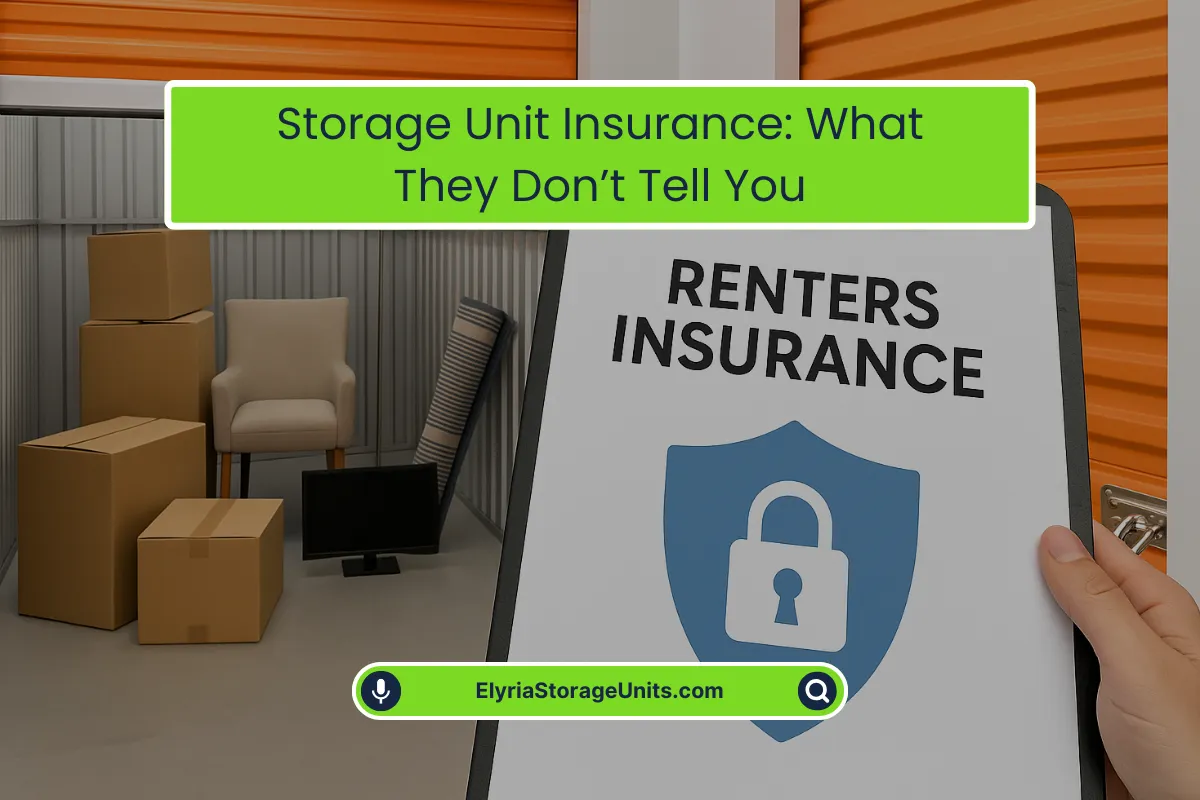
Picture this: You’ve just finished the marathon of packing your unit. You’re sweaty, you’re tired, and you’re at the front desk signing the final papers. The manager slides a clipboard toward you and taps a line. “We do recommend our insurance partner’s plan. It’s just $12 a month. Want to add it?”
Most people just say yes. It feels like part of the process, like buying the extended warranty on a TV. But here’s the brutal truth nobody in that moment tells you: That quick “yes” can be almost meaningless if you don’t understand the rules of the game.
Let’s break down the unspoken truths.
First: Your “Automatic” Coverage is a Ghost
Every storage facility has a clause about liability. It’s buried in your rental agreement. It usually says they carry insurance on the building itself. Here’s the translation: If a tornado picks up our building and drops it in the next county, their policy helps them rebuild. It does absolutely nothing to replace your smashed china, your waterlogged sofa, or your ruined family photos. That’s on you. Relying on the facility’s “insurance” is like expecting your landlord’s fire insurance to replace your burnt couch in your apartment. It’s just not how it works.
Second: That “Replacement Value” Promise is a Trap (If You’re Not Ready)
You’ll see policies offering “replacement value.” Sounds great, right? They’ll give you cash to buy a new version of whatever you lost. But here’s the kicker—they need you to prove what you had. I’ve sat with customers filing claims, and the hardest question is, “What was in the unit, and what was it worth?”
You’ll say, “My living room set! A big TV! Boxes of my kid’s clothes and toys!”
The adjuster will say, “Okay. Make, model, and receipt for the TV? Photos of the living room set showing its condition? An itemized list of the children’s clothing?”
Crickets.
The secret weapon isn’t a fancy policy. It’s your phone. Before you lock that unit door, take a video. Walk through your stuff. Narrate it. “This is the West Elm sofa, purchased in 2021, here’s a close-up of the leg where the dog chewed it… these five boxes are labeled ‘Kitchen – Good Dishes’… this is my son’s mountain bike, a Trek 820, I have the receipt in my email.” Store that video in the cloud. Email it to yourself. That 3-minute video is worth more than any premium you’ll pay.
Third: The Exclusions List is Where They Get You
Everyone thinks of fire or theft. But read the exclusions—the tiny print—on any policy. That’s where the real story is.
- “Mold, Mildew, or Dampness of Atmosphere.” This is a huge one. If your unit isn’t climate-controlled and a humid summer leads to a fuzzy green jacket or a warped wood chair, that claim might be denied. It wasn’t a “sudden event,” it was “atmospheric.” This is the #1 reason we push climate-controlled units for anything sensitive.
- “Vermin or Insect Infestation.” A mouse family moves into your box of winter coats? Sorry. That’s considered preventable by you, the renter, by using plastic bins instead of cardboard.
- “Mysterious Disappearance.” If you show up and that one specific box of tools is gone, but the lock was intact and there’s no sign of break-in… good luck. You have to prove how it happened.
So, what should you actually do?
- Call your home/renter’s insurance agent FIRST. Don’t ask the storage clerk; call the person who already has your business. Say, “Hey Linda, I’m putting stuff in storage. What does my policy do here?” Sometimes you’re already covered. Often, you can add a simple, cheap “off-premises” rider that’s better and cheaper than a separate policy.
- If you buy a separate plan, treat it like a game of “What If.” What if there’s a flood? (Is it in a flood zone?) What if there’s a long power outage in summer and my climate-control fails? (Does the policy cover mechanical failure?) Match the coverage to your actual fears.
- Pack like you have no insurance. Because in many ways, for the small, sentimental things, you don’t. No policy will ever replace your grandmother’s hand-written recipes if they’re destroyed. Put irreplaceable things in sealed plastic tubs with silica gel packs. Photos should be in archival boxes. This is your true first layer of defense.
At the end of the day, our job at A-Affordable Storage is to give you a solid, clean, and safe space. We’re proud of our facilities. But we’re not an insurance company. Our real value is in giving you this straight talk upfront, so you can make a smart choice. We want you to store with us for years, with total confidence, not because you didn’t read the fine print, but because you did—and you protected your life’s stuff the right way.
So take a breath. Make that call to your agent. Take that video. Then go get yourself a well-deserved coffee. You’ve just done the most important part of renting a storage unit.



0 Comments