
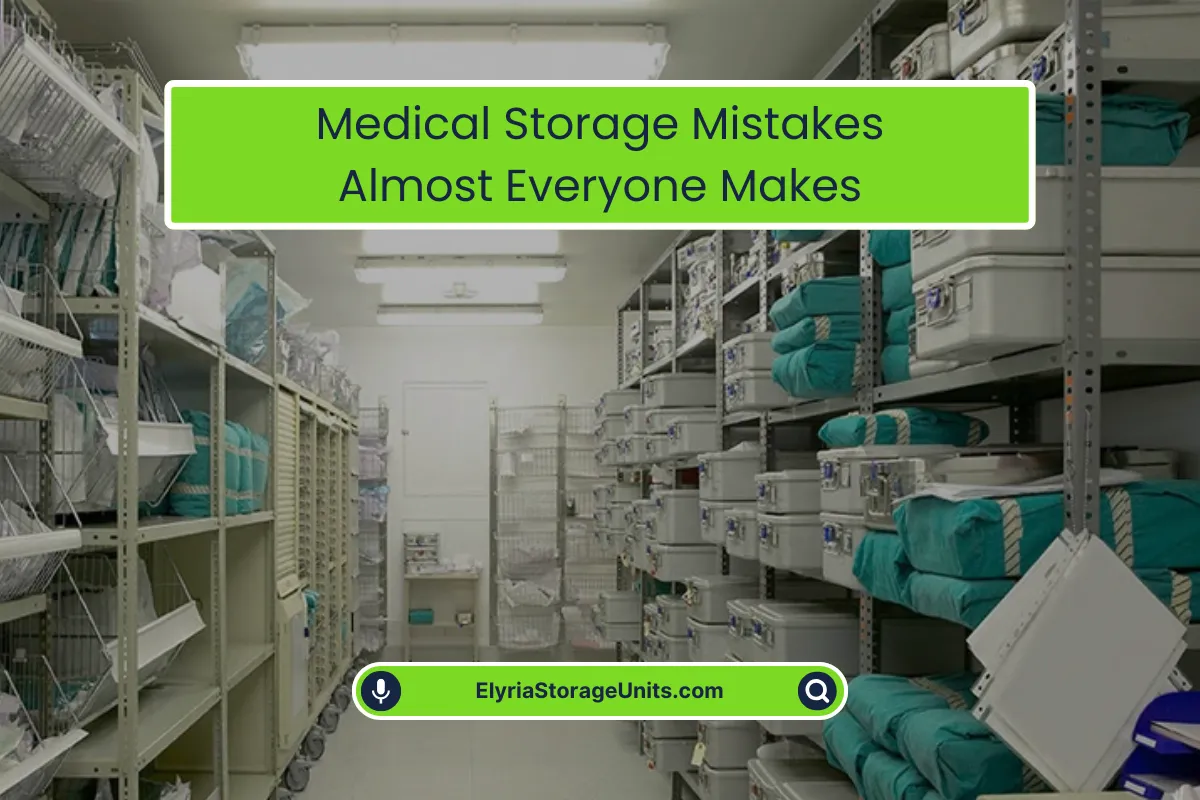
Okay, look. Let me put my coffee down and talk to you straight. No robot voice, I promise. Just me, thinking about the dumb stuff I’ve done with my own medical junk.
You remember that knee brace I bought after I tweaked my ankle playing softball last summer? Cost me ninety bucks. I used it for a week, felt better, and then… I think I threw it in the laundry room? Or maybe it’s in the trunk of my car? Honestly, I have no clue. But I know if I roll my ankle tomorrow, I’m gonna be at the pharmacy buying another one. What a waste.
That’s what this is about. It’s not about perfect organization with little labels. It’s about the slow bleed of cash because we treat important stuff like an afterthought.
Mistake 1: The Bathroom is a Liar
It has “medicine” right in the name. “Medicine Cabinet.” It’s a trap! I learned this the hard way with a pricey bottle of melatonin gummies. They morphed into one sticky, weird-smelling glob because of the shower steam. That humid air is like a silent destroyer. It gets into everything. Those fancy wound dressings? The adhesive turns to garbage. The spare hearing aid batteries? They’ll konk out. Your bathroom is for toothpaste and shampoo. Period. Get the important stuff out of there.
Mistake 2: The Kitchen Counter Graveyard
This feels so logical. Keep pills where you eat breakfast so you remember! But my kitchen counter is a warzone of sunlight, coffee steam, and splatters. Medications hate heat and light. They start to break down. That thyroid pill or that expensive migraine prescription? Its power is fading right there next to the toaster. And don’t get me started on the junk drawer. Tossing a pulse oximeter in with the takeout menus and dead batteries is a guarantee you’ll never find it until you’ve already ordered a new one from Amazon in a panic.
Mistake 3: The “I Bought It in Bulk” Black Hole
We’ve all done it. A great sale on allergy meds! A giant box of bandages! You feel like a genius, a prepared survivalist. You use one packet. The rest of the box gets shoved… somewhere. The top shelf of the linen closet? Behind the holiday decorations? And then, six months later, when your sinuses are killing you, you tear the house apart, cursing your past self. You can’t find the giant box you know you bought. So you run out and buy the small, overpriced box at the gas station. You just paid twice. The “savings” from the bulk buy is gone. The clutter remains.
Mistake 4: The Emotional Attachment to Expired Crap
This one is pure psychology. That half-used tube of antibiotic ointment from your kid’s summer camp scraped knee in 2019. It’s still… mostly there. It feels wasteful to throw it out. So it sits in the basket, next to the dried-up superglue. But here’s the thing: that ointment isn’t just weaker. It could be growing something funky. Using it on a fresh cut could cause more problems. Expired pills can change chemically. Holding onto this stuff isn’t being thrifty. It’s being risky. And it buries the good stuff you actually need.
So what’s the actual solution for normal people?
Forget the complex systems. Just do this:
- Pick ONE “Active” Spot: Not the bathroom. Not the sunlit counter. Find one drawer or one shelf in a hall closet, a bedroom, anywhere cool and dark. That’s where the current stuff lives. The pills you take daily, the fresh box of bandaids, the thermometer that works.
- Do a 10-Minute Purge: Seriously, set a timer. Pull everything medical from every drawer and cabinet. Chuck anything expired. No guilt. If you haven’t used a specialized brace or tool in over a year and you’re healed, let it go. The mental space is worth it.
- Admit You Need an “Archive”: This is the key. You’re not a hospital. You don’t need instant access to the post-surgery pillow from your appendix operation five years ago, or the bulk pack of gauze for a project you finished, or your mom’s old walker for when she visits. This is the clutter that makes the “active” spot impossible to manage.
This is where my own lightbulb went off. I was tripping over a nebulizer my aunt left here, and I realized I was sacrificing my own closet space for stuff I use maybe twice a year. That’s when I looked into a small storage unit.
Hear me out—it’s not for junk. It’s for the important overflow. I got a small, climate-controlled one. Not a damp garage or a dusty attic. A clean, dry, room-temperature space. I bought three clear plastic bins. I labeled them: “Aunt Linda’s Stuff,” “Seasonal/Sick Supplies,” “Extra Paperwork & Manuals.” It took one afternoon.
Now, my hall closet is for coats. My “Active” medical drawer is actually findable. And when my aunt visits, or flu season hits, I drive five minutes, grab the bin I need, and I’m prepared. I’m not wasting money on duplicates. I’m not ruining supplies. I just finally admitted that my 2-bedroom apartment shouldn’t have to function as a medical warehouse.
It’s about being smart, not perfect. Stop letting your stuff cost you money twice. Get the daily stuff under control at home, and for the love of all that is holy, get the “just-in-case” archive out of your living space. Your sanity (and your wallet) will thank you. Now, if you’ll excuse me, I need to go look for that knee brace in my trunk.








0 Comments